


REACTIVE ENERGY AND INDUCTIVE LOADS: THE INDUSTRIAL CONTEXT
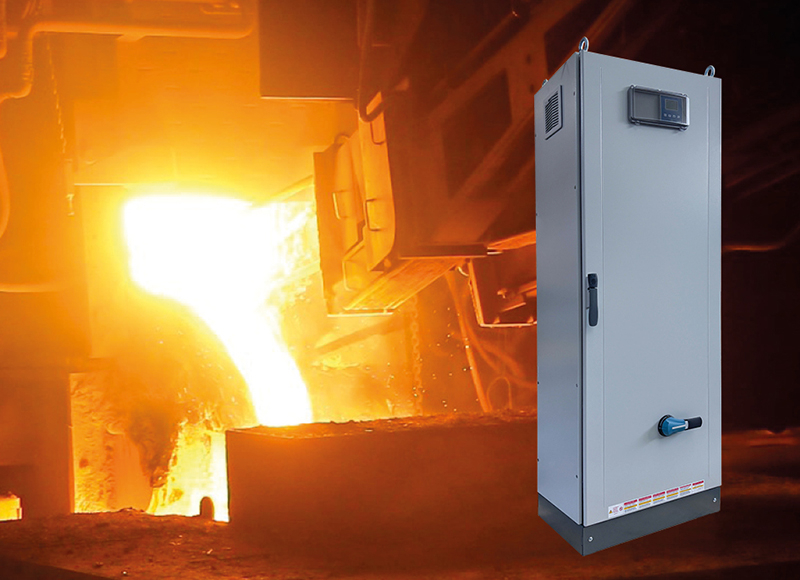
In North Africa, many industrial and infrastructure sites operate with highly inductive loads (motors, HVAC, compressors). A non-optimised power factor means more current draw, higher losses, voltage drops, and potential fines.
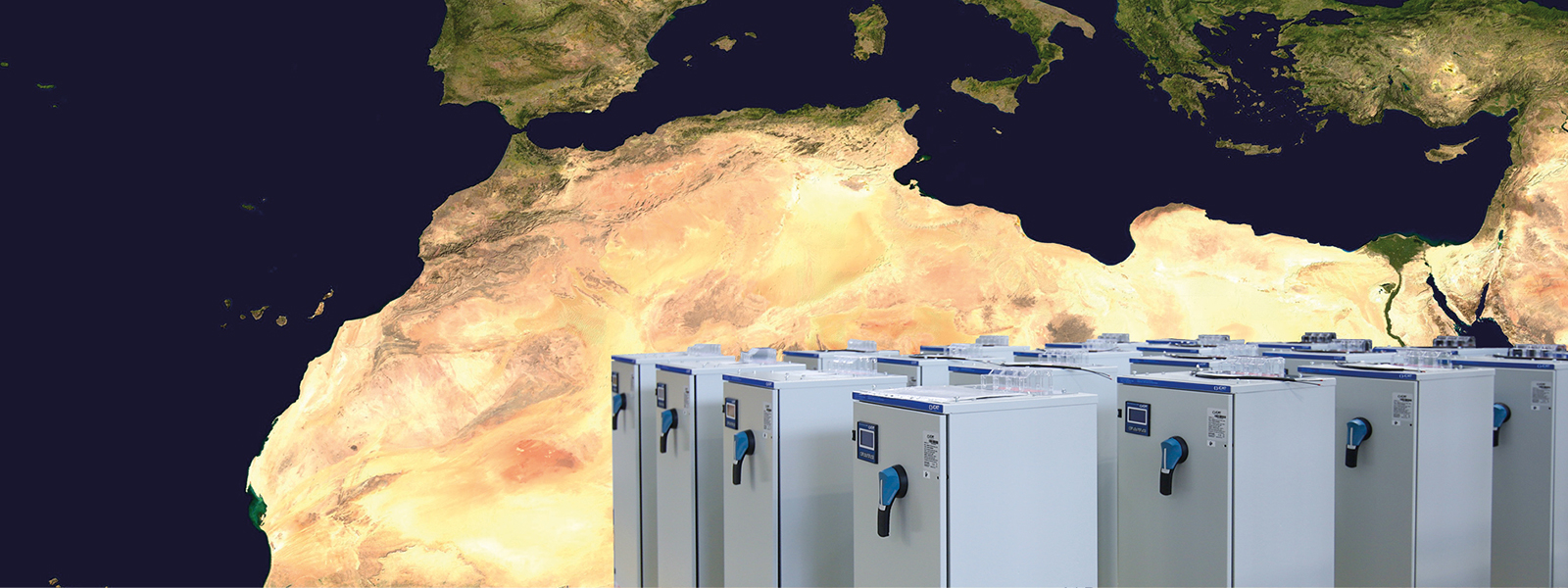
Ortea Next provided a stock-based supply of HP10 systems to a local partner, ensuring availability and fast delivery.
WHY POWER FACTOR CORRECTION IS A CONCRETE SOLUTION
By locally compensating reactive power, correction systems reduce apparent power demand. Key benefits:
- Avoidance of power factor fines
- Greater transformer and panel capacity
- Fewer losses and improved voltage profile
Note: In high-harmonic environments, detuned or filtered solutions may be needed. The provided HP10 models are suited for limited THDI%R.
THE SUPPLY: HP10 RANGE FROM 72 TO 400 KVAR
Supplied systems (415V/50Hz):
- MICROMATIC HP10 – 72 kvar: compact, for distributed correction
- MINIMATIC HP10 – 240 kvar: mid-size, multi-step regulation
- MIDIMATIC HP10 – 320 kvar: for heavy loads and main panels
- MIDIMATIC HP10 – 400 kvar: for large inductive applications
This range allows fast response with standardised, ready-to-use solutions.
HP10 KEY FEATURES
HP10 units are designed for reliable, maintainable operation:
- Automatic microprocessor-based regulation
- Contactors with damping resistors to reduce inrush
- Load-break switch with door interlock, auxiliary transformer
- Electrical specs: Ue 400-415 V, Un 415 V, Umax 455 V, 50 Hz
- Indoor installation, continuous service, delta connection
- Low heat dissipation (~2 W/kvar)
CONCLUSION: AVAILABILITY AND MEASURABLE BENEFITS
Stocking the right HP10 systems means faster deployment and concrete gains in energy efficiency.
Ortea Next delivers customised power quality solutions, backed by engineering expertise and technical support.
FAQ
- Why is power factor correction especially valuable in North Africa?
Many industrial applications in the region rely on highly inductive loads (motors, HVAC, compressors, pumps). A low power factor increases current draw, losses, and the risk of fines. Power factor correction reduces apparent power demand and improves overall efficiency. - How do you choose the right kvar rating between 72 and 400 kvar?
It depends on installed power, load profile, and the target power factor. In practice, smaller ratings (e.g., 72 kvar) are often used for distributed correction, while 240-400 kvar is typical for main panels and heavier loads. - When do you need detuned or filtered solutions for harmonics?
If the installation has significant harmonic distortion (often due to drives, inverters, UPS systems, etc.), capacitors may be overstressed. In such cases, detuned reactors or filtering solutions should be assessed. The supplied units are suitable when THDI%R is limited/moderate. - What does “multi-step automatic regulation” mean and what are the benefits?
The controller automatically connects/disconnects capacitor steps according to load conditions, keeping the power factor close to the setpoint. This delivers steadier compensation, a better voltage profile, and reduced inefficiencies.