



THE CLIENT
The customer is a long-established Italian industrial group and a leader in the production of corrugated cardboard and sustainable packaging solutions. With an integrated supply chain ranging from paper recycling to finished packaging design, the company operates modern plants and very high-speed corrugators to serve large-scale retail and the e-commerce sector.
THE NEED
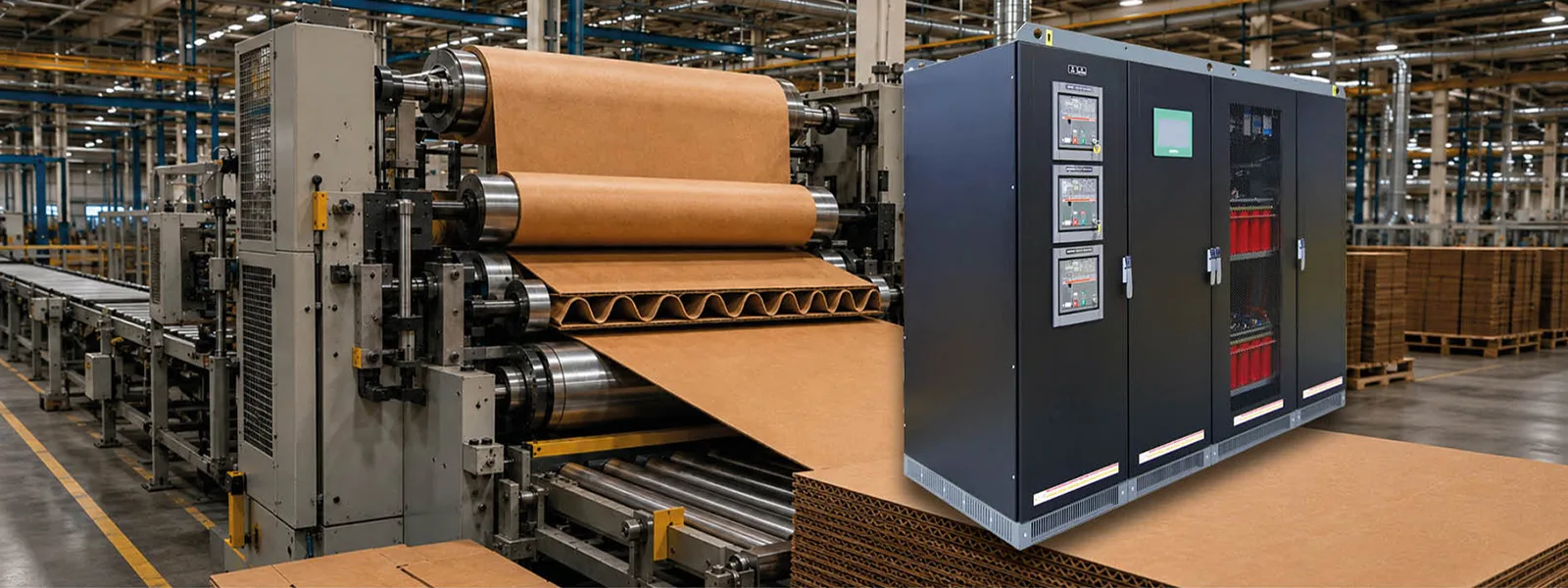
The beating heart of the plant is the corrugator: an imposing machine, several dozen metres long, where the paper is heated by steam, glued and coupled at speeds exceeding 300 metres per minute.
Voltage micro-interruptions on the electrical network were a daily critical issue for the electronic controls of the corrugator and for the cutting, slitting and ejection systems. The main problem lay in the domino effect generated by a micro-event:
- Paper web breakage: the slightest speed variation between the different motorised rollers caused the immediate tearing of the tensioned cardboard web.
- Plant clogging: the cardboard continued to accumulate at high speed before the sensors stopped the feed, causing dangerous jams in the heated cylinders.
- Long setup times: every stoppage required manual removal of the jammed cardboard, washing of the rollers to remove glue residues and restart of the complex machine, with huge losses in hourly productivity.
OUR SOLUTION
Ortea solved the problem at its root by supplying an Oxygen Zero 500 kVA K micro-interruption compensator to protect the main corrugator line and the critical automation systems.
The system acts instantly, compensating micro-interruptions for the entire duration of the transient and “isolating” the plant electronics from external disturbances.
The key advantages that determined the success of the installation include:
- Native integration with automation: thanks to the response speed (<5 ms), the corrugator inverters do not perceive the network disturbance, maintaining perfect motor synchronism and paper web tension.
- K configuration: the protection circuit breakers on board the machine reduced installation costs and times within the existing main switchboard.
- Almost zero maintenance: the absence of batteries avoids periodic replacement cycles, a crucial factor in a 24/7 sector where every scheduled stoppage must be minimised.
- Energy efficiency (>99%): the operating cost of the system is practically negligible, preserving the overall efficiency of the plant (OEE).