


In industrial plants and in contexts with high electrical sensitivity, power supply quality is no longer a marginal issue: it is a variable that directly affects productivity, process reliability and equipment lifespan. Voltage variations, voltage dips and micro-interruptions are distinct phenomena, with different causes, impacts and technical solutions. Understanding their differences is the first step in finding your way among the available technologies and designing a response that is consistent with the needs of your plant.
This guide was created to accompany energy managers, electrical designers, maintenance managers and plant managers through a decision-making path: from recognising the disturbance to identifying the most suitable solution family, through to references to vertical in-depth content designed for specific application contexts.
WHY POWER SUPPLY QUALITY IS NOW A CRITICAL VARIABLE
Modern plants are increasingly automated, interconnected and dependent on power electronics. Production lines, control systems, drives and actuators operate with lower tolerances than in the past and no longer accept fluctuations or interruptions, even of very short duration.
Added to this transformation is an energy context undergoing profound evolution: the growing integration of renewable sources, the spread of storage systems and the presence of sensitive loads in complex environments make power supply quality a structural issue, no longer linked to individual problematic plants. Today, the problem concerns not only the availability of energy, but above all its quality and continuity.
In this scenario, electrical anomalies that once went unnoticed can result in line stoppages, production rejects, resets of control systems and premature equipment wear. The question is no longer “whether” to intervene, but “how” to correctly read the overall picture in order to choose the most suitable technical approach.
NOT ALL ELECTRICAL DISTURBANCES ARE THE SAME
The generic term “voltage instability” covers phenomena that are profoundly different from one another. Treating all critical issues as if they were equivalent is one of the most frequent mistakes and inevitably leads to incorrect or oversized technological choices.
To design the correct solution, it is necessary to distinguish the nature of the phenomenon, its duration and the specific impact on the loads involved. Only starting from this distinction is it possible to assess which solution family is truly relevant.
VOLTAGE VARIATIONS
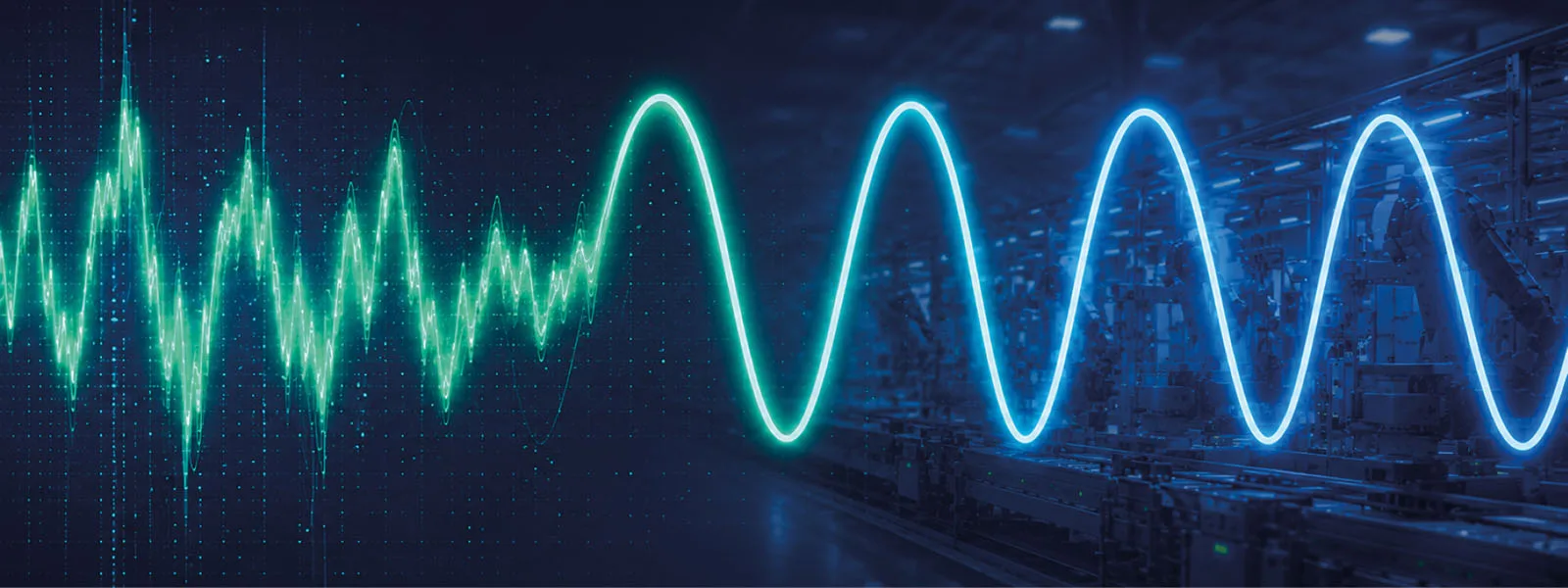
Voltage variations are deviations from the nominal value that occur gradually or repeatedly, even for prolonged periods. Even if limited, if they persist they can compromise process reliability and accelerate equipment wear: not all critical issues derive from interruptions.
VOLTAGE DIPS AND MICRO-INTERRUPTIONS
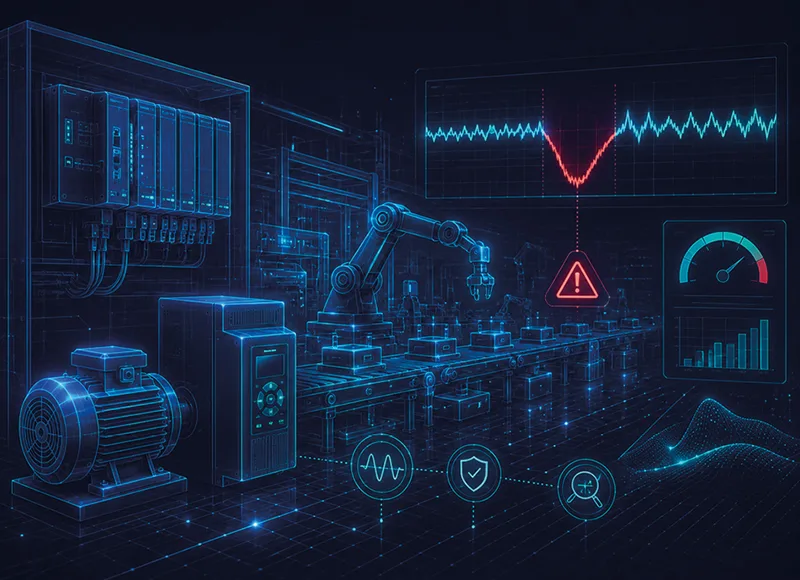
Voltage dips and micro-interruptions are rapid phenomena, of very short duration, but with significant impacts on automated processes and sensitive loads. The criticality does not depend only on the extent of the drop, but on the speed of the event and the sensitivity of the connected equipment. In sectors such as the plastics industry or food & beverage packaging, even almost imperceptible events can result in line stoppages, rejects and loss of synchronism.
WHICH SOLUTION IS NEEDED BASED ON THE PROBLEM
Once the nature of the disturbance has been recognised, the next step is to understand which solution family is suitable. Stabilisation, compensation of voltage dips and micro-interruptions are not synonyms: each technology responds to a specific phenomenon and operates on different time scales and intervention logics.
The correct choice comes from the intersection between type of phenomenon, load sensitivity and criticality of the application context. Addressing the issue only from the product point of view, without first reading the problem, often leads to ineffective or disproportionate solutions.
WHEN TO CONSIDER A VOLTAGE STABILISER
The voltage stabiliser is the correct response when the dominant problem is maintaining a stable voltage value over time. It is indicated in scenarios in which the plant has recurring variations and the processes require a constant power supply in order to function reliably.
The operational benefits concern the protection of sensitive loads, the reduction of equipment wear, greater predictability of performance and a reduction in consumption linked to overvoltages. However, the stabiliser is not the technology suitable for countering rapid phenomena such as voltage dips or micro-interruptions: it operates on a different time scale and with a different logic.
WHEN COMPENSATORS FOR VOLTAGE DIPS AND MICRO-INTERRUPTIONS ARE NEEDED
If the real problem is the voltage dip or the micro-interruption, a technology designed specifically for that phenomenon is needed. Intervention speed becomes the determining factor: compensators are designed to respond in times in the order of milliseconds, guaranteeing operational continuity even during rapid events.
In many industrial contexts, automated lines, continuous processes, environments with high sensitivity, stabilisation alone is not sufficient. Service continuity, in these cases, is measured by the ability to overcome almost instantaneous events without generating stoppages or malfunctions.
WHEN AN INTEGRATED APPROACH IS NEEDED
In plant reality, the problem is rarely a single one. A plant may simultaneously have needs for stability, continuity, protection from harmonics and voltage optimisation. In these cases, the choice does not concern a single product, but the coherent combination of several technologies within an architecture designed on the specific context.
This is where the value of an integrated approach matters most: the ability to read the overall picture, identify the relevant critical issues, select the appropriate technologies and integrate them coherently. Ortea Next operates precisely according to this logic, providing a complete portfolio, electromechanical and static stabilisers, compensators, transformers, power factor correction systems, active filters and voltage optimisers, and a design approach oriented towards the overall solution.
HOW THE CHOICE CHANGES BASED ON THE APPLICATION CONTEXT
The same electrical anomaly can have very different meanings and impacts depending on the environment in which it occurs. The choice of solution therefore depends not only on the type of disturbance, but also on the criticality of the process, the sensitivity of the loads and the architecture of the plant. For this reason, there are vertical in-depth contents dedicated to specific contexts.
AUTOMATIC LINES, PLCs AND DRIVES
In highly automated environments, even a rapid electrical event can stop a production line. PLCs and drives are among the loads most sensitive to voltage dips and micro-interruptions: a loss of synchronism, a reset of the control system or a drive fault quickly result in production stoppages, processing rejects and non-negligible reset times.
In automated manufacturing, continuity is therefore played out on the ability to manage rapid events that affect the control nodes. The cost of the problem is not only technical, but operational and economic: hours of production lost, material rejected, complex restarts.
PLANTS WITH PV AND RECURRING ELECTRICAL SIGNALS
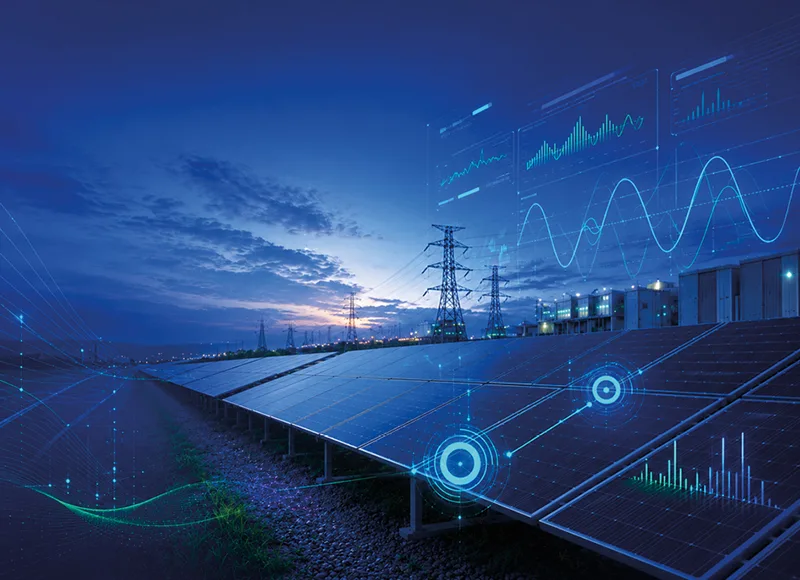
In contexts characterised by the presence of photovoltaic plants, electrical criticalities can manifest themselves through intermittent symptoms, sometimes difficult to interpret correctly. Sporadic alarms, temporary disconnections, non-linear signals and irregular behaviours do not always indicate an evident fault: they are often the reflection of electrical phenomena that require careful and specialist reading.
In these cases, even before choosing a solution, it is necessary to understand the electrical events observed: an accurate diagnosis is the basis for any effective intervention.
FROM SYMPTOM TO SOLUTION: HOW TO FIND YOUR WAY
Here is a quick map that connects the most frequent symptoms to the most probable phenomena. The logic is simple: start from what is observed in the plant to arrive at the right content.
IF THE PROBLEM IS THE LINE STOPPAGE OR THE RESET OF AUTOMATION LOADS
If sudden stops, PLC resets, drive faults or losses of synchronism occur on the plant, the most probable phenomenon is linked to voltage dips or micro-interruptions that impact the automation control nodes.
IF YOU OBSERVE INTERMITTENT ELECTRICAL SYMPTOMS IN THE PRESENCE OF PV
If the plant has sporadic alarms, temporary disconnections, non-linear signals or electrical events that are difficult to read, especially in the presence of photovoltaic generation, the first step is to correctly interpret the nature of the symptoms.
ORTEA NEXT SOLUTIONS FOR VOLTAGE STABILITY AND CONTINUITY
Ortea Next has been operating in the field of power quality and energy efficiency since 1969, with a complete and integrated portfolio designed to respond in a structured way to the criticalities of modern plants. The range covers voltage stabilisers, compensators, isolation transformers, power factor correction systems, active filters and voltage optimisers, with the possibility of developing custom solutions based on the analysis of the loads and the specific requirements of each plant.
The added value is not only in the completeness of the portfolio, but in the design capability to read the problem, select the coherent technology and integrate several elements into a single architecture. Alongside this there is consolidated industrial experience, entirely Made in Italy production with certified standards and a widespread technical presence in over 100 countries.
VOLTAGE STABILISERS FOR PLANTS WITH RECURRING VARIATIONS
The Ortea Next stabiliser range includes electromechanical and static, single-phase and three-phase solutions, with power ratings ranging from 1 kVA up to 6000 kVA for the most demanding industrial applications. The Vega, Antares, Orion, Orion Plus, Sirius and Sirius Advance series cover electromechanical stabilisation; the Gemini, Aquarius and Odyssey series respond to static stabilisation needs, where the response must be very fast and moving parts are not allowed.
This variety allows the right technology to be chosen according to the size of the plant, the type of loads, industrial, advanced tertiary, sensitive environments, and the specific needs for precision and intervention speed.
COMPENSATORS FOR VOLTAGE DIPS AND MICRO-INTERRUPTIONS
For rapid phenomena, Ortea Next offers two dedicated solutions: Oxygen, voltage dip compensator with response time of less than 3 ms and power ratings up to 2500 kVA, and Oxygen Zero, micro-interruption compensator based on supercapacitors, with response time of less than 5 ms and power ratings up to 1500 kVA.
Both technologies are designed to intervene in contexts where compensation speed is the critical factor: production lines, continuous processes, environments with high automation and sectors in which service continuity is a non-negotiable requirement.
AN INTEGRATED APPROACH TO READ THE PROBLEM AND DEFINE THE SOLUTION
The Ortea Next approach does not end with the choice of product. It is structured in several phases: analysis of the phenomenon and of the plant context, selection of the technology coherent with the problem, integration of several elements when necessary, design support and technical support in the subsequent phases.
The final objective is operational continuity and process protection, obtained through a response coherent with the specific application context.
CASE HISTORIES AND APPLICATION SCENARIOS
To explore various applications of the different solution families in greater depth, we refer you to the CASE HISTORIES section of our website. Filter among the various solutions and consult the published case histories.
FAQ
WHAT IS THE DIFFERENCE BETWEEN A VOLTAGE STABILISER AND A COMPENSATOR?
The voltage stabiliser is designed to keep the voltage value constant in the presence of gradual or recurring variations. The compensator instead intervenes on very rapid phenomena, voltage dips and micro-interruptions, with response times required in the order of milliseconds. The two technologies respond to different problems and, in many plants, can coexist within an integrated architecture.
DOES A STABILISER ALSO SOLVE VOLTAGE DIPS AND MICRO-INTERRUPTIONS?
In general no, or only to a limited extent. The stabiliser operates with a logic and intervention speed designed for voltage variations, not for rapid and very deep phenomena. For voltage dips and micro-interruptions, a specific compensation technology is needed. The choice depends on the nature of the dominant phenomenon and on the level of protection required by the loads.
Every critical context has different needs: to choose between stabilisers, compensators or dedicated solutions, it is useful to start from the type of disturbance, the loads involved and the level of continuity required.
The Ortea Next technical team is available to analyse the specific case and identify the solution most coherent with the characteristics of your plant.